
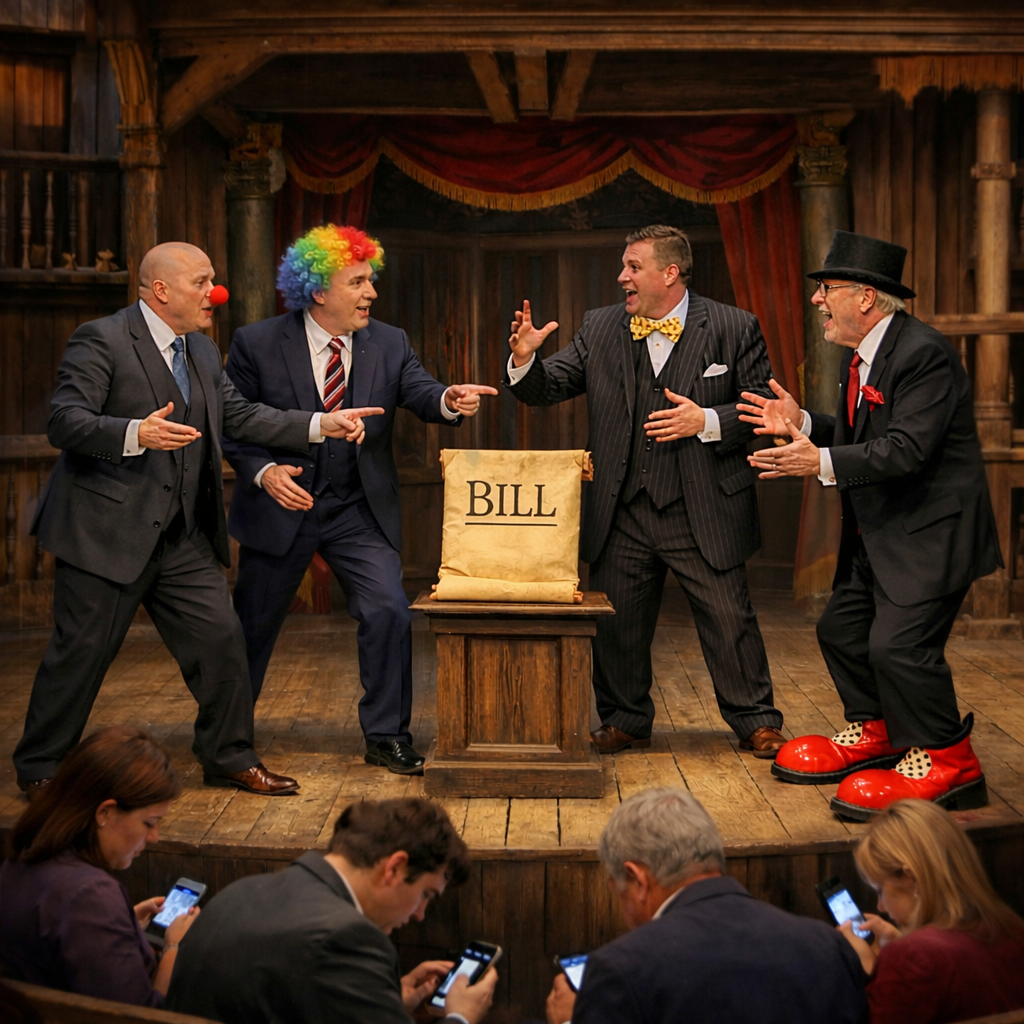
In America, we are adept at electing clowns and charlatans, and then ignoring or not bothering to understand what they are saying or doing.
I blame this on our addictions to television and social media, making us unable or unwilling to think for ourselves and question anything.
But I digress.
The thought was triggered by the recent announcements from the current Administration regarding their efforts to reduce drug pricing in the US.
A large aspect of this is their desire to “…get the excess profits away from the PBMs.”
The PBM issue is quite complex, and perhaps worthy of a separate discussion.
Instead, this post opens a different can of worms: that of the online pharmacies and their impact on drug pricing.
The impact of these efforts on US drug pricing is clearly relevant for anyone in the licensing world. One social media post can trigger large-scale changes to pricing assumptions in valuations and financial models.
But only if any of the noise made by these clowns is actually real and impactful.
The Players
Let’s take a look at five of the online “pharmacies.” We admit that the use of the word “pharmacies” in this context is not entirely correct. Regardless, let’s run with it.
In no particular order:
Cost Plus
Mark Cuban’s Cost Plus Drug Company operates on transparency: cost + 15% + $3 pharmacy fee + $5 shipping. Their key innovation is that Cost Plus vertically integrated into manufacturing, opening a Dallas facility producing sterile injectables and pediatric chemotherapy drugs.
Cost Plus is explicitly anti-PBM, so no rebates and no formulary games. They partner with aligned PBMs to reach employer plans. So some insurance is accepted by Cost Plus.
In theory, this works well for generics that they manufacture, but it can’t overcome brand-name drug pricing power (more later).
Amazon Pharmacy
Amazon acquired PillPack in 2018 and launched Amazon Pharmacy in 2020, leveraging Amazon’s massive logistics capabilities. Their $5/month RxPass covers many common generics, including Medicare.
The problem here is that Amazon partnered with the PBMs, thereby accepting their economics. So while the customer experience may be good, they essentially have the same economics as a retail pharmacy.
TrumpRx
Where to begin with this one…
The Trump administration launched TrumpRx.gov as a government referral platform (not an actual pharmacy) offering manufacturer discount codes based on international reference pricing.
However, the model is immediately flawed because TrumpRx is for branded prescription only, which is roughly 10% of the Rx market. Coupled with the fact that that ~85% of Americans have prescription drug coverage, you’re looking at a business model that will affect <5% of the prescription volume.
And it excludes Medicare/Medicaid (which is largely generic anyway).
This is political theater at its best. Big Pharma traded very modest discounts for some political capital.
That’s it.
Hims / Hers
Hims & Hers disrupted the patient journey for stigmatized conditions, such as erectile dysfunction, hair loss, mental health, dermatology, and now weight management.
The model combines telehealth consultations with affiliated pharmacy fulfillment (90% of orders) via subscription pricing.
They are highly focused on a patient acquisition funnel for conditions requiring embarrassing visits. They created a new market segment but represent a fraction of the overall Rx volume. Nevertheless, it is an interesting lesson in how being selective in their customer / indication can result in a profitable (albeit niche) business model.
GoodRx
We have to include GoodRx in here because it is somewhat relevant to this discussion. GoodRx isn’t a pharmacy either. It’s a coupon aggregator profiting from our unusual pricing model.
Pharmacies set inflated cash prices (often 20x cost), and then GoodRx partners with PBMs to access insurance network rates. Consumers pay the lower rate, and GoodRx gets a cut.
Rent-seeking at its best.
Hence, GoodRx’s business model depends on pharmacies maintaining artificially inflated cash prices. If pharmacies adopted transparent cost-plus pricing (like Cost Plus Drugs), GoodRx would cease to exist.
GoodRx has have some legal issues, such as an FTC fine of $1.5Mfor data sharing. They’ve made the dysfunction somewhat tolerable, but certainly not fixed it.
Will This Impact US Drug Pricing?
No. Not one bit.
Cost Plus Drugs and Amazon Pharmacy represent opposite approaches to the same challenge.
Cost Plus offers transparency through vertical integration and manufacturing capability, explicitly positioning itself against PBMs in a way that resonates with self-insured employees.
Amazon leverages superior logistics, but works within the existing insurance system to maximize addressable market.
Yet both face the same reality: Cost Plus is limited to generics, while Amazon is accepting PBM economics.
Neither offers fundamental pricing innovation for the brand drugs that drive 88% of costs.
TrumpRx.gov and Hims & Hers serve narrow niches with inherent limitations.
TrumpRx signals political acknowledgment of the drug pricing problem and may provide meaningful savings on cash-pay weight-loss drugs, but it addresses only 2-3% of the prescription market, excludes Medicare and Medicaid entirely, covers just 43 drugs, and is politically unstable.
Hims & Hers has achieved some disruption in patient acquisition for stigmatized conditions, but operates solely in niche therapeutic areas representing a sliver of the total market and faces demonstrated regulatory risk, as evidenced by the GLP-1 compounding shutdown.
GoodRx exposes the system’s absurdity while depending on it. Its business model fundamentally relies on the broken pricing system it claims to fix.
Structural Barriers
Imagine for a moment a curvy, hilly, narrow road built in the 19th century. Houses and fields now occupy the land on both sides of the road. A prudent speed limit is applied to the road.
Now suppose we want to “restructure” it to permit electric vehicles traveling at 200 kph to use this road at top speeds.
We (who is “We” in this context?) would need to:
- Buy out all of the homes and property and relocate everyone
- Widen the road substantially
- Create a new, wider, flatter road
- Remove and replace the underground water supply and drainage systems
- Relocate electrical and internet cables
- Et cetera
This is the analogous problem we are facing in the US with prescription pricing.
The current PBM structure has been around for decades. It will not disappear, regardless of political or economic intentions.
Like our road, we have some very large structural barriers:
Brand Drugs Drive Costs, These Models Target Generics
Brands represent roughly 10% of all prescriptions, but 88% of the spending. Only TrumpRx addresses brands, but on a very limited scale.
Insurance = PBM Channel Lock-In
Over 84% of Americans have Rx insurance. Since prescriptions flow through PBMs, PBMs control the channel. Insurance creates powerful incentives (lower copays, network requirements, deductible counting) that lock patients into PBM-preferred pharmacies. Without scale to negotiate rebates or dispensing fees competitively, new entrants can’t disrupt this.
Vertical Integration = Profit Migration
The Big 3 PBMs (CVS Health, UnitedHealth, Cigna) own pharmacies AND insurers. Attempts to squeeze PBM profits just shifts them to affiliated entities within the same conglomerate. Suddenly “AI Access Fees” will be added to their invoices.
Can you imagine the Government targeting Ford because they have “excess profits” on the sales of Mustangs and F-150 trucks?
Me neither.
Ironically, these business models target the uninsured, which is the smallest, poorest market segment least attractive to manufacturers.
Manufacturers profit the most from the insured market where PBMs adjudicate claims.
Again, what comes out of Washington is all theatre. It’s not impactful in any way.
Implications for Licensing and Valuation?
None.
Carry on.
Like our fictitious road, real reform would require some unbelievable changes, such as:
- Federal legislation banning PBM integration, perhaps via anti-trust legislation. Like Jarndyce, that would take decades and dozens of lawsuits.
- Patent reform limiting branded exclusivity and accelerating time to genricization (again, good luck)
- Enforcement of international-based pricing (again, how exactly?)
- Employers completely abandoning PBMs
None are happening. These five models provide marginal improvements for small patient subsets while the fundamental structure generating high prices remains untouched.
The prescription drug pricing problem won’t be solved by better apps or AI or EVs or slick logistics.
It will be solved (if ever) by the vertical integration allowing PBMs to capture value across the supply chain, and the misaligned incentives where middlemen profit when prices rise (a subject for another post).
Until then, these models will serve their niches: a few million patients getting slightly cheaper generics or more convenient care, which is great.
Important for those individuals?
Absolutely.
Transformative for US drug pricing?
Not even close.
NB: LLMs were used for the research aspects of this post.